Same-Day Appointments Available!


Dental Prosthesis and Its Types

Dental prosthesis is a crucial aspect of modern dentistry, providing solutions for patients with missing or damaged teeth. These prosthetic devices restore function, improve aesthetics, and enhance overall oral health.
As a dentist serving the Boynton Beach community, I often encounter patients with questions about dental prostheses and the options available. This blog post aims to shed light on dental prostheses, their types, and the benefits they offer.
What is a Dental Prosthesis?
A dental prosthesis is an artificial device used to replace missing teeth and surrounding tissues. They are designed to restore the normal function and appearance of teeth, helping patients maintain proper chewing, speaking, and smiling capabilities.
Dental prostheses can be either fixed or removable and are tailored to meet the specific needs of each patient.
Types of Dental Prosthesis
1. Dental Implants
Dental implants are one of the most advanced and effective solutions for replacing missing teeth. They consist of a titanium post that is surgically inserted into the jawbone, acting as an artificial tooth root. Once the implant integrates with the bone, a crown is placed on top to complete the restoration.
Benefits
- Durability: Implants can last a lifetime with proper care.
- Stability: They provide a strong foundation, mimicking the function of natural teeth.
- Aesthetics: Implants look and feel like natural teeth.
If you have a lost tooth or multiple teeth, You may consider dental implants as the best replacement option. Consult our implant dentist in Boynton Beach to know more!
Statistics
According to the American Academy of Implant Dentistry, over 3 million people in the U.S. have dental implants, and this number is growing by 500,000 annually.
2. Dentures
Dentures are removable prostheses that replace multiple missing teeth. They come in two main types: complete dentures, which replace all teeth in an arch, and partial dentures, which fill in gaps when some natural teeth remain.
Benefits
- Affordability: Dentures are generally less expensive than other prosthetic options.
- Non-Invasive: They do not require surgery, making them suitable for patients who may not be candidates for implants.
- Adaptability: Dentures can be adjusted and relined as needed to ensure a proper fit.
Challenges
- Stability: Dentures can sometimes shift or move, requiring adhesives for stability.
- Maintenance: They need to be removed and cleaned daily.
3. Dental Bridges
Dental bridges are fixed prostheses that replace one or more missing teeth by anchoring to adjacent natural teeth or implants. A bridge consists of crowns on either end, connected by a false tooth (pontic) in the middle.
Benefits
- Fixed Solution: Unlike dentures, bridges are permanently fixed in place.
- Aesthetics: Bridges blend well with natural teeth, providing a seamless look.
- Functionality: They restore proper chewing and speaking functions.
Considerations
- Support: Bridges rely on the health and strength of adjacent teeth.
- Longevity: With proper care, bridges can last 10-15 years.
4. Veneers
Veneers are thin shells made of porcelain or composite resin that cover the front surface of teeth. They are primarily used for cosmetic purposes to enhance the appearance of teeth that are discolored, chipped, or misaligned.
Benefits
- Aesthetic Enhancement: Veneers provide a natural and attractive appearance.
- Minimally Invasive: The procedure requires minimal removal of tooth structure.
- Durability: Porcelain veneers are stain-resistant and can last many years.
Limitations
- Cost: Veneers can be expensive, especially if multiple teeth are involved.
- Irreversibility: The procedure is not reversible, as it involves altering the natural teeth.
5. Crowns
Overview
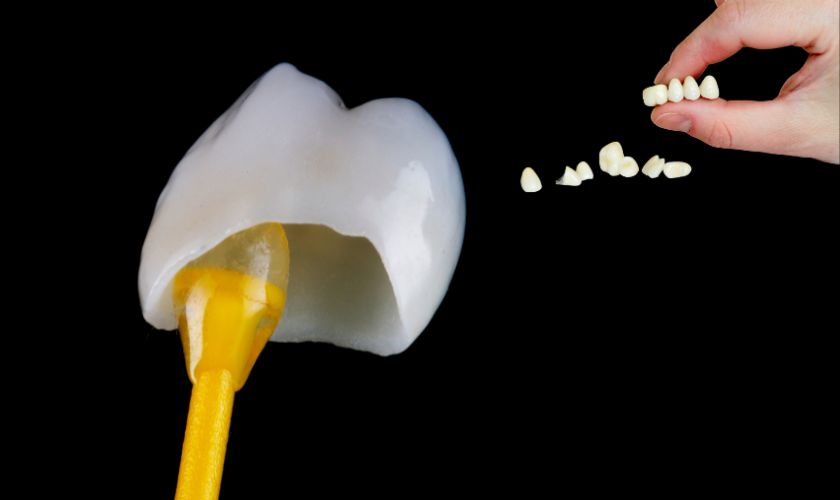
Crowns, also known as caps, cover and protect damaged or weakened teeth. They can be made from various materials, including porcelain, metal, or a combination of both. Crowns restore the shape, size, and function of teeth.
Benefits
- Protection: Crowns provide strength and stability to compromised teeth.
- Aesthetic Options: Porcelain crowns offer a natural look that blends with existing teeth.
- Versatility: They can be used for various restorative needs, including after root canal treatment or for supporting dental bridges.
Statistics
The American Dental Association reports that more than 15 million people in the U.S. have crown and bridge replacements for missing teeth.
Choosing the Right Dental Prosthesis
Selecting the appropriate dental prosthesis depends on several factors, including the patient’s oral health, preferences, and budget. A thorough dental examination and consultation are essential to determine the most suitable option.
Factors to Consider
- Oral Health: The condition of gums, remaining teeth, and jawbone.
- Functionality Needs: Chewing efficiency, speech, and stability.
- Aesthetic Preferences: Desired appearance and natural look.
- Cost and Insurance: Budget considerations and insurance coverage.
Conclusion
Dental prostheses offer life-changing benefits for individuals with missing or damaged teeth. Whether you opt for dental implants, dentures, bridges, veneers, or crowns, each type of prosthesis is designed to restore function, enhance aesthetics, and improve overall oral health. As a dedicated dentist in Boynton Beach, my goal is to provide personalized care and guidance to help you make informed decisions about your dental health.
If you’re considering a dental prosthesis or have any questions, don’t hesitate to schedule a consultation at our Boynton Beach office. Together, we can explore the best options to achieve a healthy, beautiful smile.