Same-Day Appointments Available!


Can Dental Implants Help You Eat Comfortably Again?
Eating should not feel like a daily challenge. Yet for people with missing teeth, even simple meals can become uncomfortable, frustrating, and limiting. Crunchy foods get avoided, favorites are left off the plate, and confidence takes a hit every time it is time to eat.
This is something the team at Ocean Dental Studio sees often. Many patients have already changed their eating habits to work around the discomfort, without realizing that the underlying issue can be addressed. With the support of Dr. Katrina Gonzalez, Dr. Hannah Tremain, and Dr. Michael Rodriguez, the goal is to restore comfort in a way that feels natural, not forced.
What Changes When You Lose A Tooth?
Tooth loss affects more than appearance. It changes how force is distributed when you chew.
When a gap is left untreated, nearby teeth begin to shift. This alters your bite and creates pressure points. Over time, the jawbone in that area may begin to weaken due to a lack of stimulation. This is why eating becomes uncomfortable. It is not just the missing tooth. It is the chain reaction that follows. Solutions that replace both the visible tooth and the root structure help restore balance. This is where modern tooth replacement, like dental implants in Boynton Beach, stands apart from temporary options.
Are You Eating What You Want, Or Just What You Can?
This is the question most people avoid asking themselves. Tooth loss, shifting dentures, or broken restorations do not just affect your smile. They quietly reshape your entire diet. Over time, many people unknowingly eliminate:
- Crunchy vegetables: Raw carrots, celery, and apples become difficult or painful to bite.
- Tough proteins: Steak, grilled chicken, and even certain seafood get replaced by softer, often less nutritious options.
- Chewy foods: Bagels, crusty bread, and similar textures trigger discomfort or embarrassment.
- Social meals: Many people stop accepting dinner invitations because eating in public feels stressful.
Nutritional studies published in the Journal of Prosthodontics found that people with missing teeth or ill-fitting dentures consume significantly fewer vitamins and minerals. That gap compounds over time, affecting energy, immunity, and overall health.
How Do Tooth Implants Restore Eating Function?
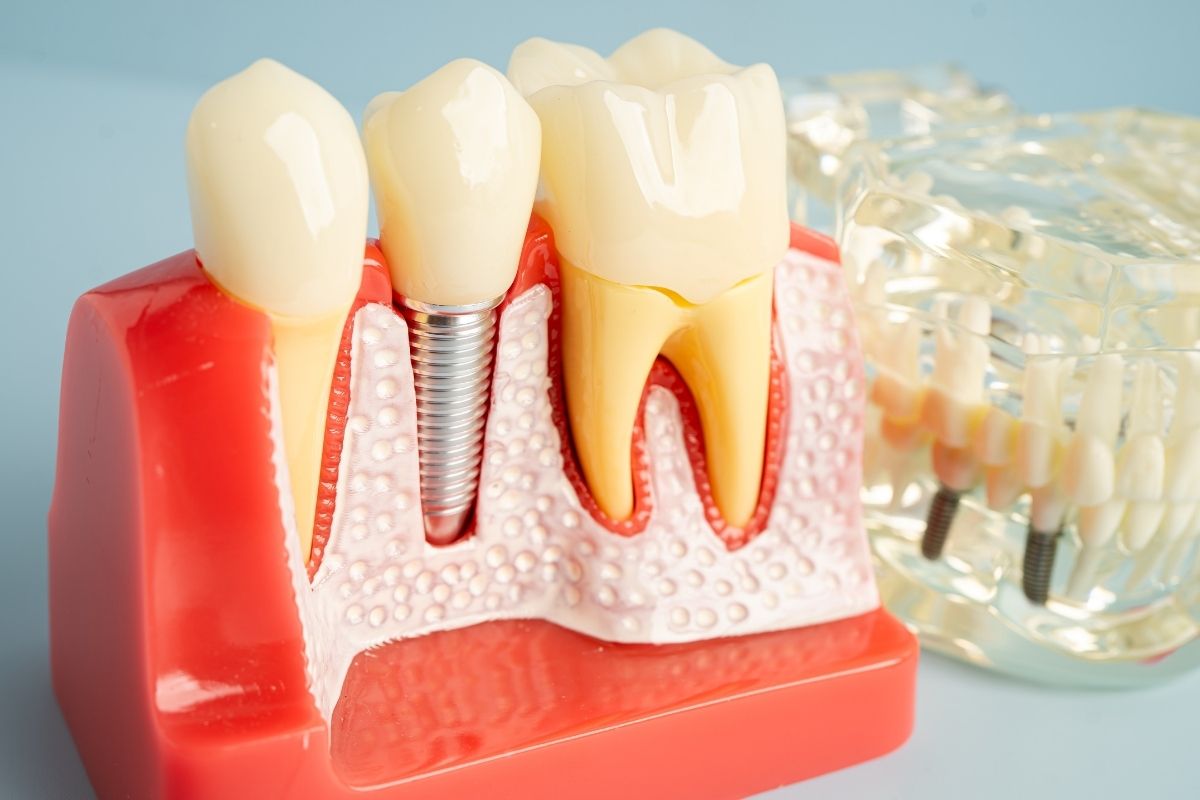
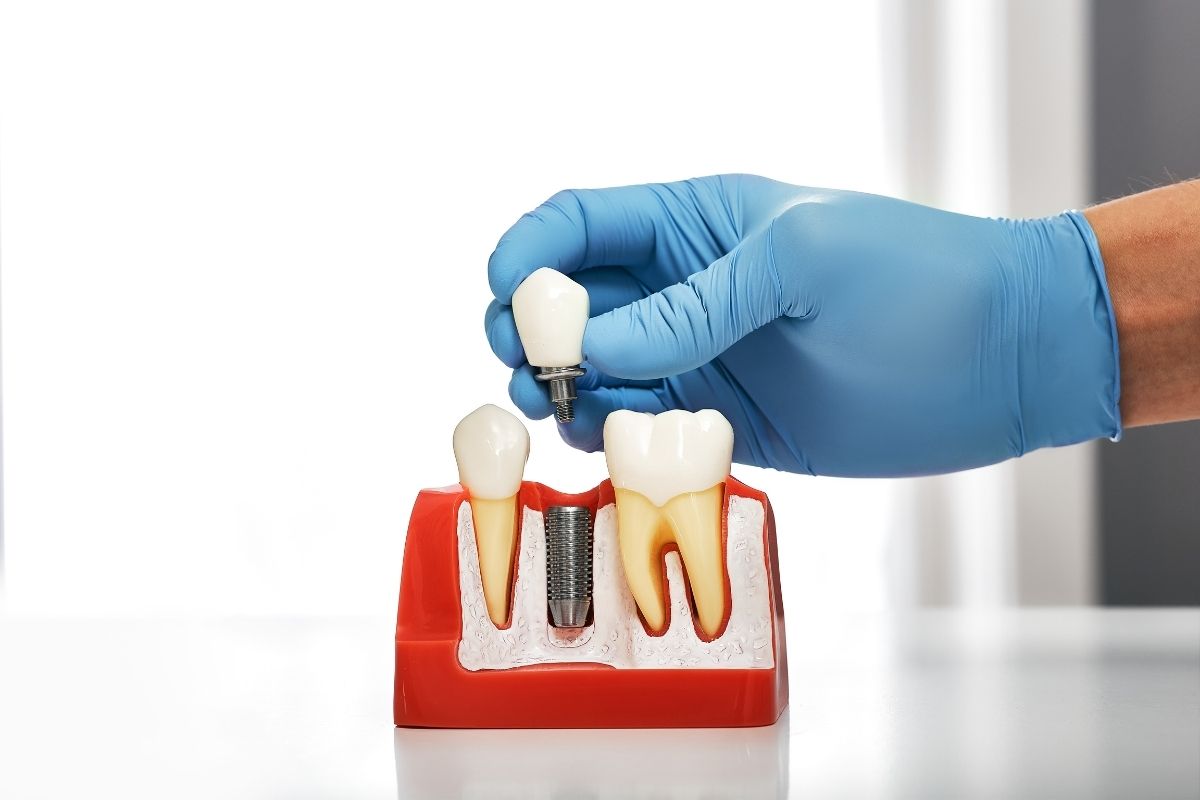
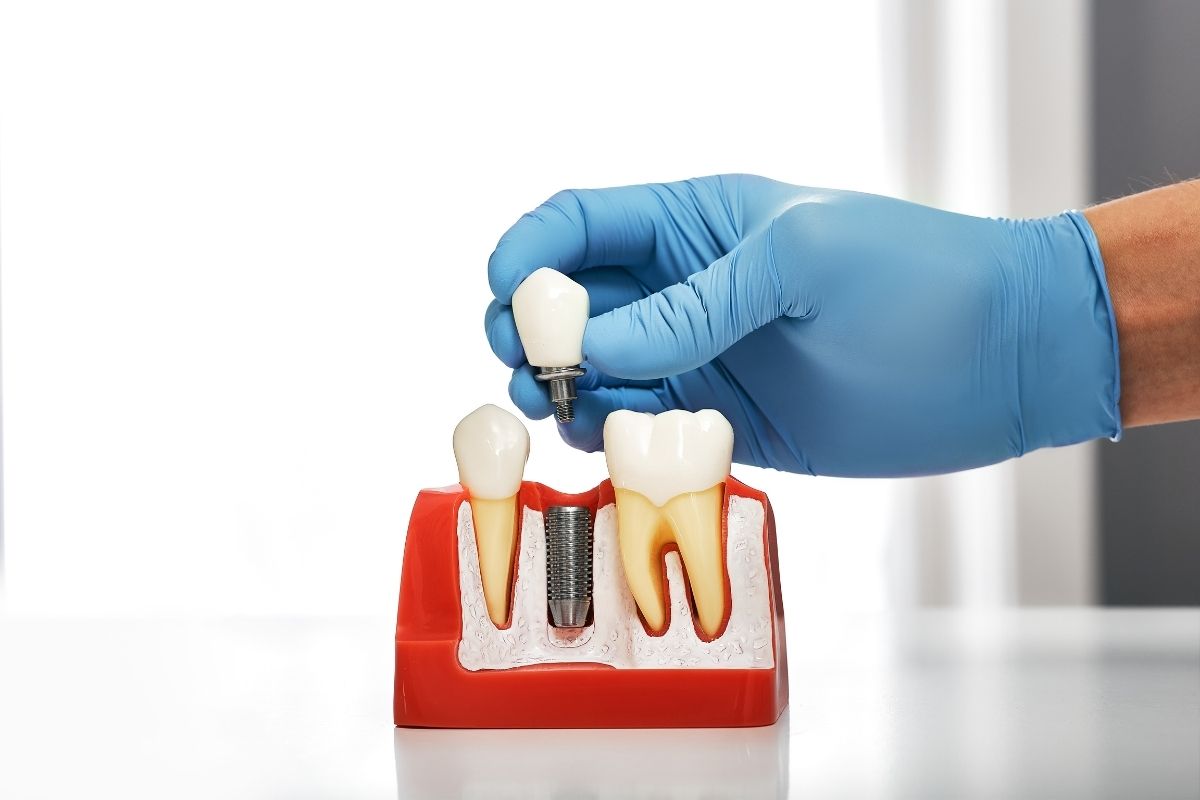
Implanted teeth restore eating function by replacing both the tooth and its root. A small titanium post is placed into the jawbone, where it integrates naturally over time. Once healed, a custom crown is attached, creating a stable and functional replacement that feels close to a natural tooth.
Unlike removable options, implants provide a secure foundation that supports everyday eating without limitations. In fact, dental implants for restoring chewing ability after tooth loss are widely recommended because they improve function at multiple levels:
- No slipping or shifting while chewing, allowing you to eat with confidence.
- Restores up to 90 percent of natural bite force, based on clinical findings.
- Stimulates the jawbone, helping maintain strength and structure over time.
- No need for adhesives or removal, making daily care simple and consistent.
Bite force is the key factor in how well you can eat. Traditional dentures usually restore your natural chewing strength. Implant-supported restorations can bring them that much closer to normal teeth. This makes it easier to enjoy a wider range of foods without discomfort or restriction.
What Makes Implants A Permanent Solution Than A Temporary Fix?
Many options replace only the visible part of the tooth. That leaves the underlying issue unresolved. A complete solution supports both the crown and the root structure. This helps maintain bone health and prevents further changes in the jaw. Those researching long lasting solution for missing teeth in Boynton Beach often discover that prosthetic teeth tick all these essentials.
How Life In Boynton Beach Raises Need For A Strong, Functional Bite?
Boynton Beach is not a city where people sit still. Residents here are outdoors, active, and social. Whether you are picking up stone crab claws at a waterfront spot or joining a weekend gathering at Oceanfront Park, food is woven into the culture. South Florida’s dining scene leans heavily into fresh seafood, tropical fruits, and bold textures that require a functioning bite.
Beyond dining, the city has a large and active senior population. Research consistently shows that chewing difficulty in older adults is linked to cognitive decline, unintentional weight loss, and reduced social engagement. For active retirees here, restoring confident chewing is not a cosmetic choice. It is a quality-of-life decision.
How Long Does It Take To Eat Normally After Implant Surgery?
This is one of the most searched questions among patients considering the procedure. The honest answer depends on the individual treatment plan.
After the implant post is placed, a healing period of three to six months is usually required. During this time, patients follow a soft food diet to protect the surgical site. Once the crown is permanently attached, most patients return to a full, unrestricted diet. Same-day implants may be an option for some patients. In these cases, a temporary tooth can be placed the same day as the procedure. This helps reduce how long you need to stay on a restricted diet.
Are Artificial Tooth Roots Better Than Dentures For Eating?
For eligible patients, the clinical evidence is consistent. Implant-supported restorations outperform conventional removable dentures in every measurable chewing metric. Dentures can make it difficult to eat harder foods and often require dietary restrictions indefinitely. Permanent tooth replacements eliminate those restrictions for most patients. They also do not create the sore spots or pressure points that removable appliances frequently cause.
What Foods Can You Eat Safely After Getting Implants?
Your diet changes in stages. In the beginning, the goal is to protect the post while it heals and integrates with the jawbone. As healing progresses, you can slowly return to a normal diet. Once fully healed, most patients regain the ability to eat comfortably and confidently without restrictions.
Here’s what you can expect at each stage:
- Immediately after the procedure: Stick to soft foods like yogurt, mashed potatoes, smoothies, and soups to avoid pressure on the implant site
- During early healing: Gradually introduce foods like eggs, pasta, soft fruits, and well-cooked vegetables
- As healing improves: Add firmer foods such as chicken, rice, and bread while chewing carefully
- After full healing: Enjoy a wide range of foods, including apples, steak, nuts, raw salads, and corn on the cob
Following your oral care provider’s timeline is essential. Rushing into hard foods too soon can affect healing, while patience helps ensure long-term strength and comfort.
Can You Too Get Implants For Your Missing Tooth Concern?
In most cases, yes. Dental implants have a success rate of 95% to 98% when placed under the right conditions. Candidacy depends on your oral health, bone support, and your body’s ability to heal after the procedure.
You may be a good candidate if you have:
- Adequate jawbone density, which allows the implant to integrate securely with the bone.
- Healthy gums, free from active infection or untreated periodontal disease.
- Stable overall health, including well-managed conditions like diabetes.
- A willingness to pause smoking, since it can interfere with healing and implant stability.
Many patients who worry about getting dental implants with bone loss can still move forward with treatment. Procedures like bone grafting can rebuild the jaw and create the support needed for long-term success.
A Smarter Way To Fix Missing Teeth And Eat Normally Again
Our team at Ocean Dental Studio Boynton Beach understands that tooth loss is not just an oral issue. It affects confidence, nutrition, and daily enjoyment of life. We invite you to visit our dental office to discuss whether implant-supported restorations are the right fit for your smile and lifestyle. There is no pressure, no guesswork, and no reason to keep rearranging your plate. Book an appointment at our Boynton Beach dental office today to restore your smile with the best treatment so that you can eat comfortably and smile confidently.
Frequently Asked Questions (FAQs)
1. How soon can normal eating resume after dental implant surgery?
Eating typically begins with soft foods during early healing. As the implant integrates with the jawbone, most individuals gradually return to a full diet without restrictions.
2. Do implanted teeth restore full chewing strength compared to natural teeth?
Implants integrate with the jawbone and function similarly to natural tooth roots. This stability allows strong biting force and efficient chewing across a wide range of foods.
3. Are dental implants better than dentures for eating comfort?
Implants remain fixed in place and do not shift during chewing. This stability improves comfort and allows more consistent biting compared to removable options.
4. What foods should be avoided immediately after implant placement?
Hard, crunchy, or very hot foods should be avoided during early healing. Soft and cool foods reduce pressure on the surgical site and support proper recovery.
5. Can artificial tooth roots improve nutrition and overall health?
Restored chewing ability allows for a wider range of foods, including nutrient-rich options. Improved digestion and balanced eating habits often follow once normal chewing function returns.